Sustainable Governance — Digital Intelligence
Value Chain Advancement and Collaboration
2025 Sustainable Supply Chain Highlights
100%
of structural and interior fit-out procurement came from suppliers in Taiwan, supporting the local economy.
100%
of suppliers signed the Supplier Code of Conduct, supporting responsible procurement.
NT$323M
Green procurement spending met our target and earned an award for outstanding performance.
67%
Indoor green building material use rate, above the regulatory minimum.

Through responsible sourcing, supplier management, and a sustainable procurement framework, we work with our supply chain partners to improve quality and safety, strengthen sustainable competitiveness, and create long-term value together.
Sustainable Supply Chain Governance

Procurement Policy
Our procurement procedures include provisions on human rights, bribery prevention and personal data protection.

Supplier Code of Conduct
We require suppliers to meet our standards for business ethics, human rights, environmental protection, occupational safety and health, and information security.

Supplier Rating System
We regularly rate suppliers on quality, on-time delivery, occupational safety and financial performance. The ratings guide how we work with each supplier.

Sustainable Procurement
We consider ESG factors in procurement decisions and promote green and local purchasing.

Shared Value Across the Value Chain
We work with our partners to strengthen supply chain resilience, reduce operational risk and create lasting value.

Local Procurement
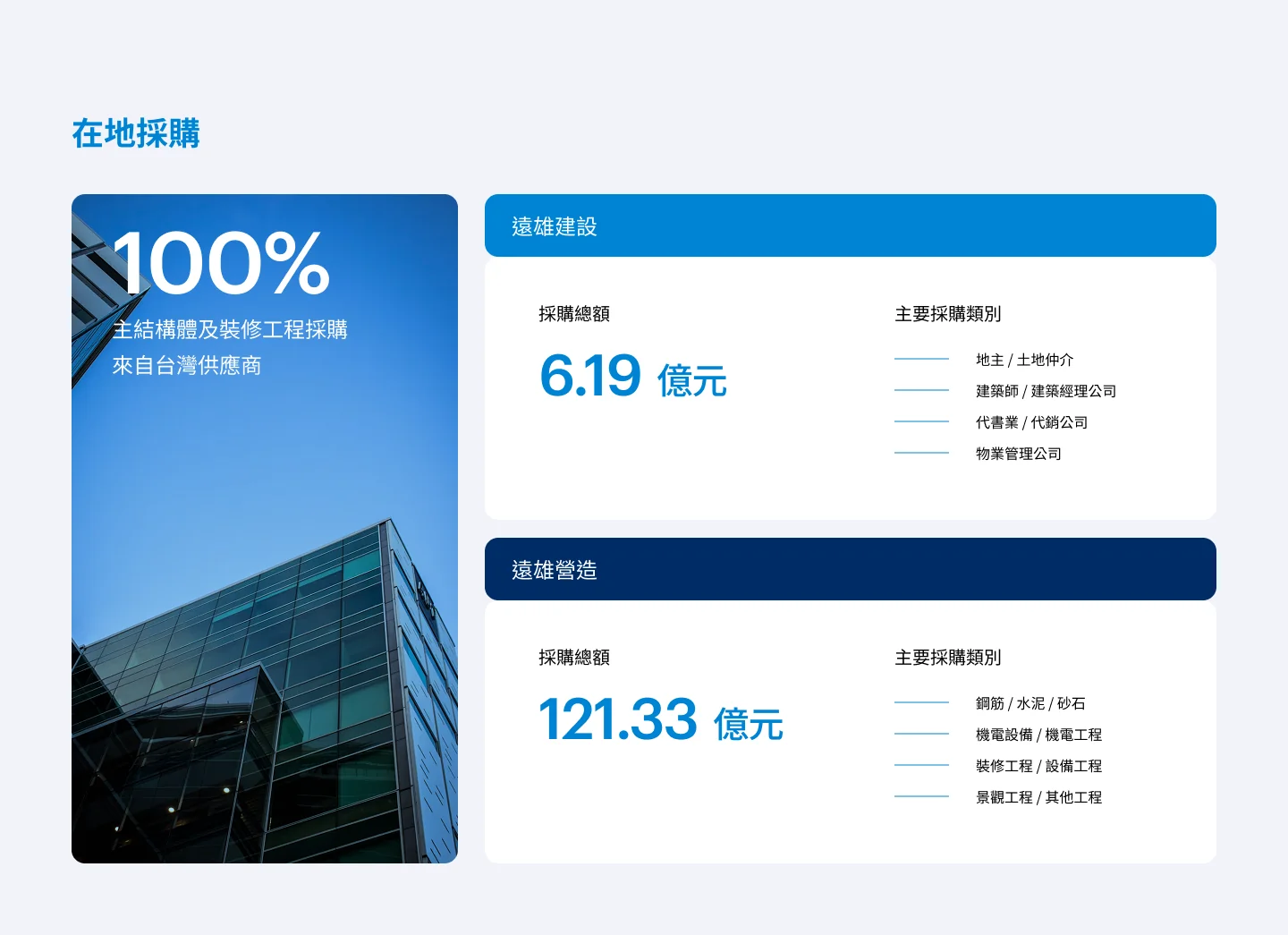
100%
of structural and interior fit-out procurement came from suppliers in Taiwan.
Farglory Land
Total Procurement Spend
NT$619M
Main Procurement Categories
- Landowners / Land Brokers
- Architects / Construction Management Companies
- Land Registration Agents / Real Estate Sales Agencies
- Property Management Companies
Farglory Construction
Total Procurement Spend
NT$12.133B
Main Procurement Categories
- Reinforcing Steel / Cement / Aggregates
- Mechanical and Electrical Equipment / M&E Works
- Interior Fit-Out / Equipment Installation
- Landscaping / Other Construction Works
Green Procurement

Total Procurement Spend
NT$323M

- 01Green Building Materials
- 02Energy-Efficient Equipment
- 03Healthy Green Building Materials
- 04Products That Meet Environmental Standards
How We Rate Suppliers
Grade

ExcellentExcellentPriority for new contracts
GoodGoodContinue working together
SatisfactorySatisfactoryContinue working together
PoorPoorProvide guidance and monitor performance
UnsatisfactoryUnsatisfactorySuspend eligibility for new contracts
2025 Supplier Evaluation Results
Farglory Land
99%
of suppliers rated B or above
Farglory Construction
94%
of suppliers rated B or above
 Review supplier performance regularly until project completion.
- Provide real-time feedback on quality, schedule, and occupational safety and health issues.
- No major human rights risk incidents occurred in 2025.
Roadmap for Implementing ISO 20400 Sustainable Procurement Guidance

2026
Short Term: Establish the Framework
- Review existing procurement procedures.
- Identify suppliers and material topics.
- Draft a sustainable procurement policy.
- Set up a system for rating suppliers and tracking performance.

2030
Medium Term: Integrate Procurement Processes
- Include sustainability requirements in supplier selection, purchasing and contract management.
- Use supplier relationship management (SRM) to better manage risk and performance.

2040
Long Term: Embed Sustainability in Strategy
- Make supply chain sustainability central to procurement strategy and risk management.
- Strengthen supply chain resilience and long-term competitiveness.